Depending on the intended use, medical simulation training skins feature sticky bases in a few distinct ways:
1. Naturally "Tacky" Silicone Pads
Most standard silicone suture pads or skin modules don't have an added adhesive layer, but high-grade silicone naturally has a high coefficient of friction. On smooth surfaces like desks, glass, or plastic tables, the flat base creates a soft "suction-like" stickiness that keeps the pad from sliding around while practicing needle passes or tying knots.
2. Adhesive-Backed Wounds & Ostomy Pads
Simulated skin modules meant to stick to manikins or standardized human actors (such as fake wounds, colostomy stomas, or pitting edema pads) often come with an explicit reusable adhesive backing. These allow students to peel off a backing layer and stick the module directly onto a surface or skin to practice bandaging, bag placement, or wound care.
[caption id="" align="aligncenter" width="676"]
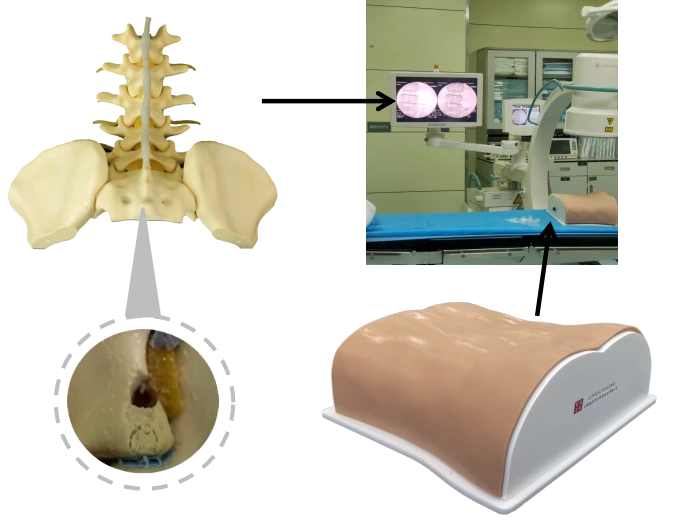 SC-LLV911S Posterior lumbar endoscopic simulation model Pro[/caption]
3. Non-Slip or Suction Bases
Many higher-end suture kits pair the silicone skin with a dedicated rigid base equipped with sticky rubber feet, anti-slip backing, or suction cups. This is specifically designed to counteract the horizontal pulling force when pulling suture thread tight.
Key Tips for Care & Maintenance
Dust reduces stickiness: Silicone bases pick up dust, lint, and hair quickly, which causes them to lose their grip on surfaces.
Easy to refresh: If a silicone base or tacky pad stops sticking, washing it with warm water and mild dish soap instantly restores its original grip once air-dried.